Signal Monitoring
Network, server, cloud, application, and link telemetry flows into a single operations view.


Always-on network operations for uptime, performance, and faster resolution.
Quisitive Businesses delivers engineer-staffed NOC operations with proactive monitoring, automated ticketing, escalation workflows, root cause analysis, capacity visibility, and SLA-based reporting across enterprise infrastructure.
Scroll left to right through the intelligent NOC chain: signal monitoring, anomaly detection, correlation, ticket creation, engineer review, escalation, and resolution reporting.
Network, server, cloud, application, and link telemetry flows into a single operations view.
Fault, capacity, and performance changes are detected before users report disruption.
Related events are grouped into one incident path to reduce noise and speed triage.
Automated tickets route to the right engineer, workflow, war room, or stakeholder path.
RCA, recurring issue prevention, SLA evidence, and availability reporting close the loop.
Traditional NOC models wait for users to report outages. Intelligent NOC operations track signal quality, capacity, performance, recurring faults, and escalation status before downtime becomes visible.
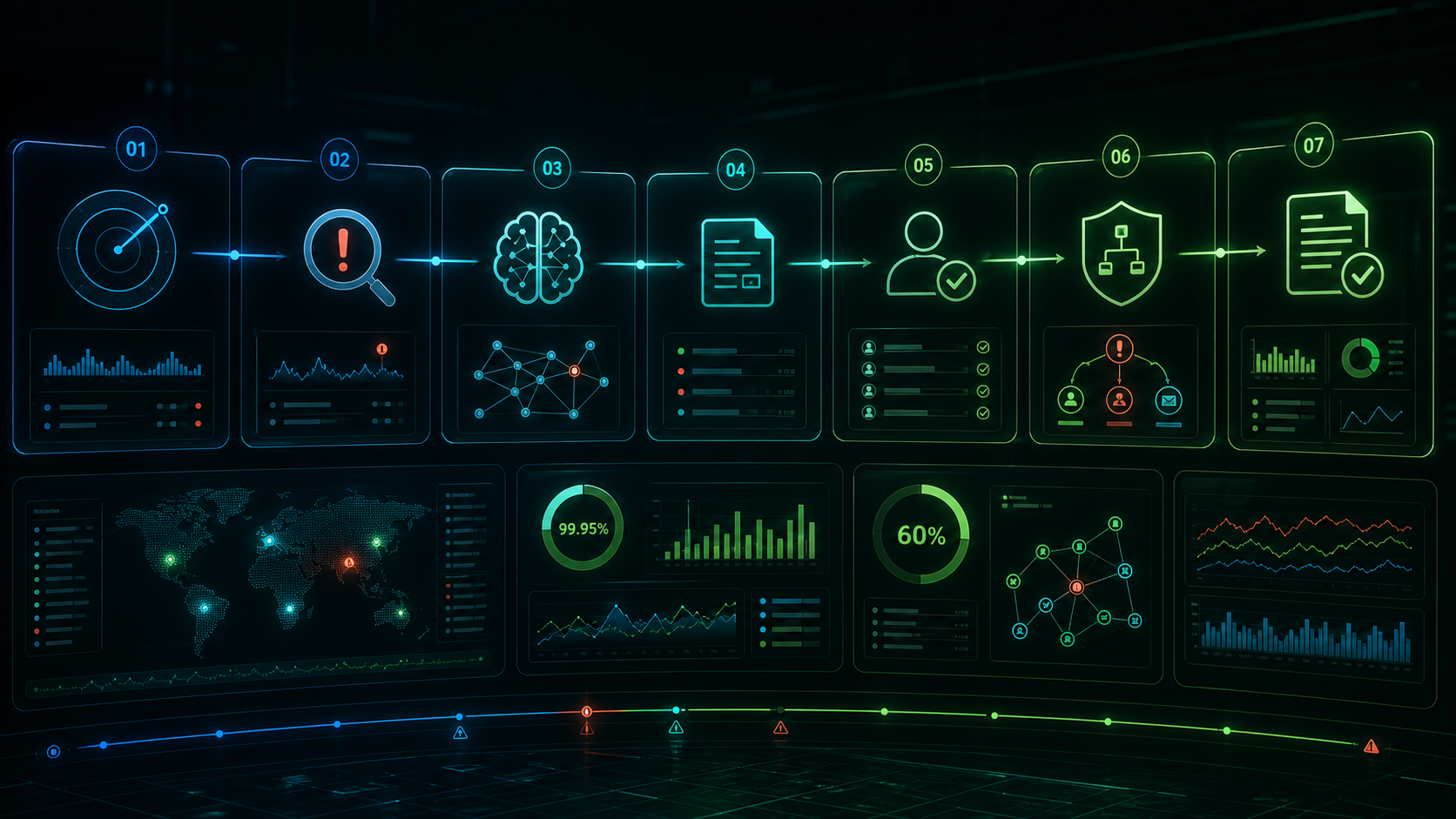
Continuous monitoring of network devices, links, servers, applications, and cloud services.
Anomaly detection across availability, performance, capacity, and fault patterns.
AIOps-ready event correlation reduces duplicate alerts and identifies incident context.
Automated ticket creation captures severity, asset, owner, and escalation path.
Dedicated engineers review, troubleshoot, and coordinate the response.
Escalation workflows, war room handling, and stakeholder updates move the incident forward.
Resolution reports, RCA, SLA performance, and recurring issue prevention close the cycle.
The iNOC slide contrasts business-hours monitoring with 24/7 dedicated engineers, proactive tracking, automated workflows, RCA, and centralized SLA reporting.
The service model aligns monitoring scope, alert taxonomy, escalation matrix, ticket workflow, reporting cadence, and operational ownership before go-live.
The Quisitive iNOC slide positions the service as a move from reactive monitoring to proactive availability management and automated escalation.
Business-hours monitoring, reactive troubleshooting, manual log review, inconsistent escalation, limited capacity trend visibility, and repetitive follow-ups.
24/7 engineers, proactive fault and capacity tracking, automated ticketing, RCA, recurring issue prevention, centralized dashboards, and SLA-based reporting.
Network devices, WAN and LAN links, servers, applications, cloud services, capacity, performance, and availability signals are brought into an operations view.
Alerts become tickets with severity and asset context, then route to the right engineer, escalation path, war room workflow, and stakeholder update cadence.
Dashboards, SLA reports, incident and resolution summaries, RCA, recurring issue notes, trend insights, and capacity indicators support management review.
Talk to Quisitive about 24/7 NOC operations, proactive monitoring, automated escalation, and SLA-backed reporting.